
 DE
DE 
Last week I was at the EUHA (hearing aid trade fair in Nuremberg). Sometimes you need a direct comparison to sharpen your own perspective.

I tried out various in-ear monitors from German brand Bachmeier and Hörluchs. Great craftsmanship, different choices in sound tuning, but something was missing from most of them. The sound felt thin, somehow incomplete. As if someone had turned off the lower frequencies.
The stage voting explained
Then it was explained to me: these IEMs are optimized for the stage, not for listening to music. The reason is simple and makes total sense. For stage situations.

When musicians play on stage, the bass mainly comes from the PA system. Kick drum and bass have their foundation via the large speakers in the hall. If the full bass range were also packed into the IEM, the monitor mix would be completely overloaded. This is why stage IEMs are deliberately tuned with a reduced bass range, sometimes with low cuts at 80 Hz. Of course, this is technically easier because good bass is rare with balanced armature drivers alone.
That's clever for the stage. But bad if you want to listen to music at home.
Missing frequency bands: the problem
As a customer, you should pay close attention to the tuning to avoid missing frequency bands. An IEM with stage tuning may be technically perfect, but when listening to music it lacks foundation. Songs sound flat, without depth, without energy.

Most manufacturers don't communicate this transparently. You buy an expensive custom IEM and wonder why your favorite albums no longer sound the way they used to.
Orphit approach: Full bass thanks to hybrid drivers
Orphit is tuned for music, not for the stage. We use an 8mm dynamic driver for rich, precise bass and combine it with balanced armature drivers for mids and highs. A true multi-way system, just like hi-fi speakers, only customized to your ear.
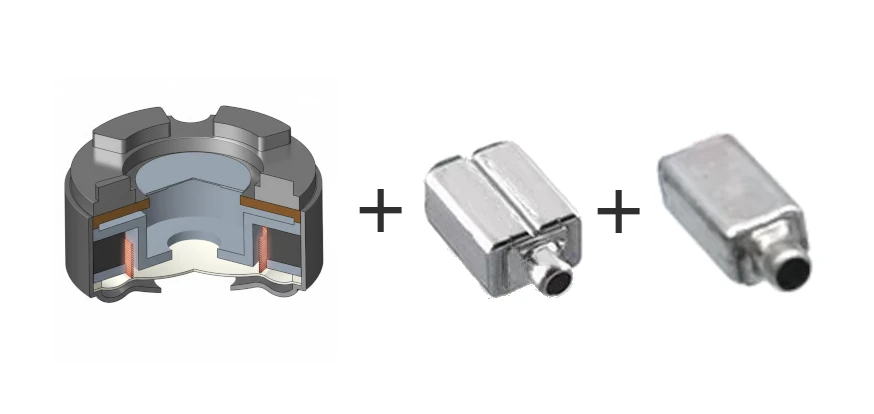
Dynamic drivers are physically better suited for bass reproduction. They move more air and generate the pressure you need in the lower frequency range. Balanced armature drivers, on the other hand, resolve the mids and highs more finely. Faster, more precise, more detailed.
This hybrid combination gives you the best of both worlds: Full, organic bass plus detailed highs.
If you want less bass, we can do that too. Maybe you're a drummer or work in the studio and need a more neutral tuning. No problem. But you get the full frequency range as standard with Orphit because we know that most customers want to listen to music, not just monitor it.
What you should look out for when buying a custom IEM
Before you order custom in-ears, ask about the tuning philosophy:
- Is the IEM optimized for the stage or for listening to music?
- Which driver configuration is used?
- Are there any measurements or frequency response diagrams?
- Can the tuning be adjusted?
You deserve to get exactly what you need.
Your music deserves the full spectrum
Wireless, custom-made earphones with hi-fi tuning, not as a compromise between stage and everyday life, but as a product that can combine both worlds.
When you're on stage, plug in the supplied MMCX or 2-pin cable. If you're on the train or working out in the gym, enjoy wireless sound with a full frequency range.

 EN
EN