
Repairing instead of disposing - Why individual headphones are different
I was at my neighbor's house the other day and found 35-year-old Ecouton audio lab Loudspeaker repaired. Functional, powerful sound, only the surrounds of the woofers had to be glued. I know the founder, who is now over 90 years old, personally and asked him how this could be possible: "Made in Germany, don't save every penny in purchasing and don't compromise on quality, use high-quality components." To this day, his successors are still able to carry out repairs.
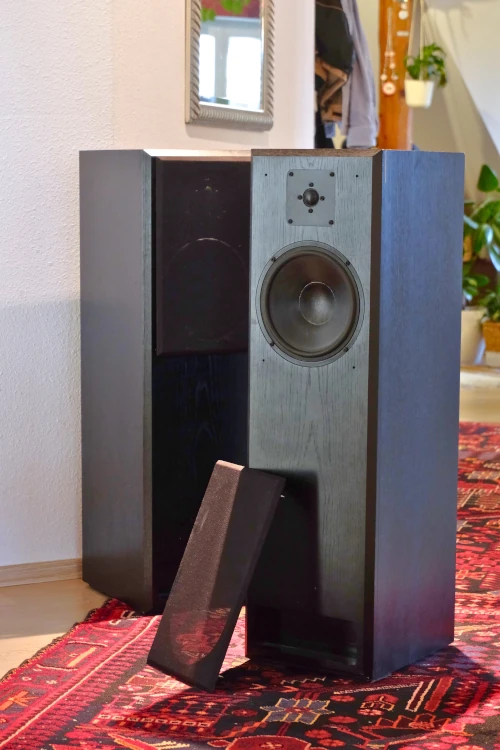
This story makes me think about our audio world today.
The TWS dilemma: Good, but not forever
Standard True Wireless Stereo Headphones are not bad products. They are practical and affordable. The problem lies elsewhere: They are not made to be repaired.
Why standard TWSs are difficult to repair
- Bonded housingOpening usually destroys the housing irreparably
- Integrated batteries: Permanently soldered, replacement only possible with special tools
- MiniaturizationComponents so small that repair becomes uneconomical
- Cost structureRepair costs or return shipment to China often exceed the new price
This is only sometimes the manufacturer's bad intention. However, these designs are also understandable in mass production with price pressure.
The disposable product TWS
Many TWSs become electronic waste after 2-3 years, even though their valuable components are still functional:
- Lithium batteriesRare materials that could be recycled
- Neodymium magnets: Rare earths in the drivers
- circuit boardsGold, silver and other precious metals
- Plastic housing: Often of higher quality than expected
These raw materials end up in electronic waste instead of being reused.
What actually happens to my "normal" earbuds when I dispose of them?
The path of your old TWS
You take your broken earbuds to the recycling center or drop them off at an electronics retailer. But what really happens then?
The recycling process:
- Initial treatment: Over 350 certified companies in Germany first check whether reuse is possible
- Dismantling: The appliances are dismantled by hand - yes, really by hand
- Material disassemblySeparation into plastic, metals and batteries
- Further utilizationIndividual fractions go to plastics recyclers or smelting works
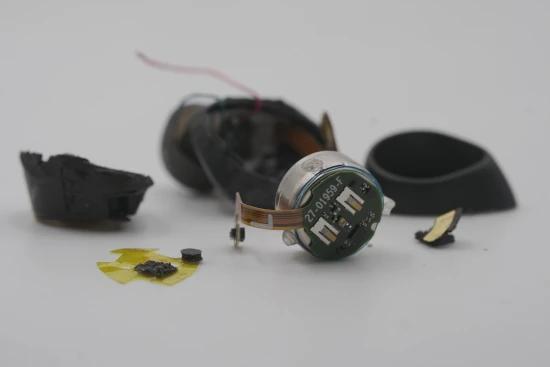
The inconvenient truth
AirPods recycling is a loss-making business. Apple partner Wistron explains: "There are no special tools or automation to open the AirPods. This has to be done manually by employees."
What is recycled:
- Lithium from the batteries - valuable and dangerous
- Neodymium from the magnets - rare earths
- Precious metals from the blanks - gold, silver
- Plastics - if separable by type
What is lost
The majority of earbuds are disposable products. Most of the components are glued and miniaturized in such a way that it is uneconomical to reuse them. The manual labor involved in dismantling costs more than the recovered materials are worth.
Particularly problematicThe batteries often fail after 2-3 years, but the rest of the electronics still work perfectly. Nevertheless, everything has to be disposed of.
Manual work enables repair
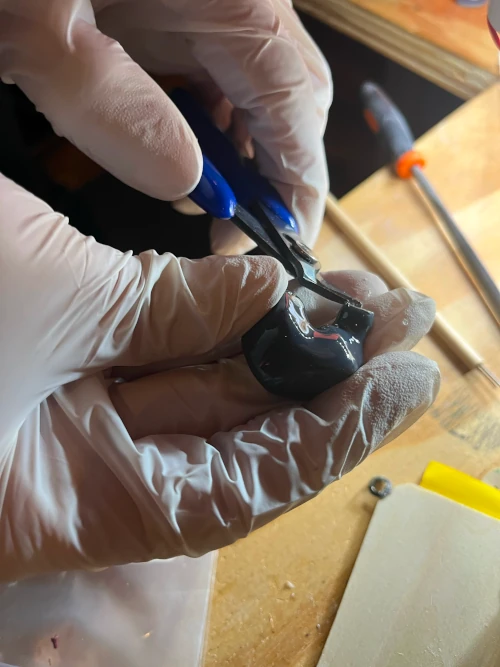
When each Orphit is individually manufactured in Germany, we know every step of the process. We can repair what we have built ourselves. We have the spare parts directly on site.
Orphit Repair concept
- Modular, high-quality components enable targeted exchange
- Repairs were taken into consideration during construction
- Documentation available for service technicians
- Spare parts available - Made in Germany means local availability
- Redemption program: We professionally recycle what is no longer repairable
- Upgrade options: Technical improvements possible at a later date
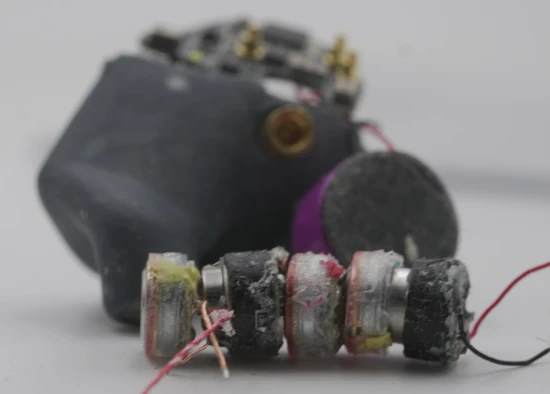
The reality of sustainability
Made-to-order advantages
Orphit Sustainability concept:
- No overproduction: Only what is ordered is manufactured
- Short delivery routesMade in Germany instead of transportation to Asia
- Fair working conditions: Transparent German standards
- Repairability: Each part can be replaced individually
Electronic waste: the sober figures
TWS-Headphones contribute to the 50 million tons of electronic waste every year. They often have to be completely replaced after 2-3 years.
The differenceThe Orphit battery still has at least 80% capacity after 500 charging cycles. And if it weakens at some point, we can swap them without having to dispose of the whole headset.
When Orphit has "grown on your ear
Reshelling: When your ear grows with you
The special thing about custom-made HeadphonesThey don't just adapt to your ear once. If your Orphit has "grown on you", it should also be able to be repaired.
Reshelling serviceYour ear changes over the years? We can adapt the housing while retaining all the electronics. If necessary, we can use the same 3D scan to produce a new, perfectly fitting housing.
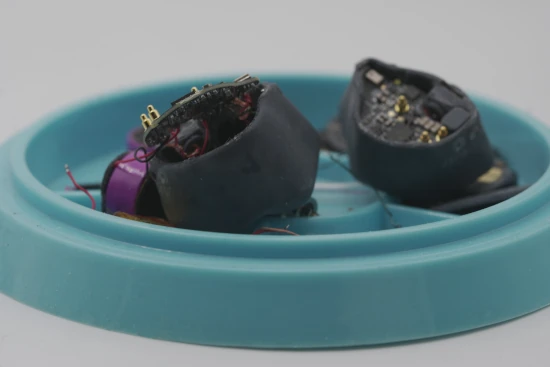
Repair as a luxury?
The Ecouton principle today
As my neighbor's loudspeaker shows: Quality and repairability used to be normal. Today they have become a niche.
The same principles that worked 35 years ago:
- High-quality components use
- Thinking repair during construction
- Create documentation for service technicians
- Stock spare parts for long-term availability
The emotional component
Of course you develop a different relationship with Headphonesthat fit your ears perfectly. But that's not the main sustainability factor. The main factor is the constructive reparability.
The realistic outlook
Small steps, honest effect
We can show: There is another way. Repairable. Durable. With respect for the resources used.
Our CO2 offset programWe plant trees for every Orphit we produce. Not to be perfectly climate-neutral, but to do our small part.
The real question
It's not about whether Custom is the future. It's about whether we want devices that can be repaired.
For smartphones, we are discussing the "right to repair". With Headphones not yet. Maybe we should change that.
Curious about Headphonesthat are built for repair? Find out more about our repair concept and why some things can simply last longer.
FAQ - Frequently asked questions
What is reshelling with custom headphones?
Reshelling means that if the shape of the ear changes, we produce a new, perfectly fitting housing while retaining all the electronics.
Which materials are recovered in TWS recycling?
Mainly lithium batteries, neodymium magnets, precious metals from circuit boards and high-quality plastics - if they are recycled properly.
How long does a Orphit battery last?
At least 80% capacity after 500 charging cycles. If the battery is weak, it can be replaced individually without having to dispose of the entire headphones.
Is the Right to Repair also relevant for headphones?
Yes, but still little discussed. Repairable design and available spare parts could significantly reduce e-waste.