
This is exactly where many "standard" headphones fail: poor voice quality and because they don't fit your anatomy.
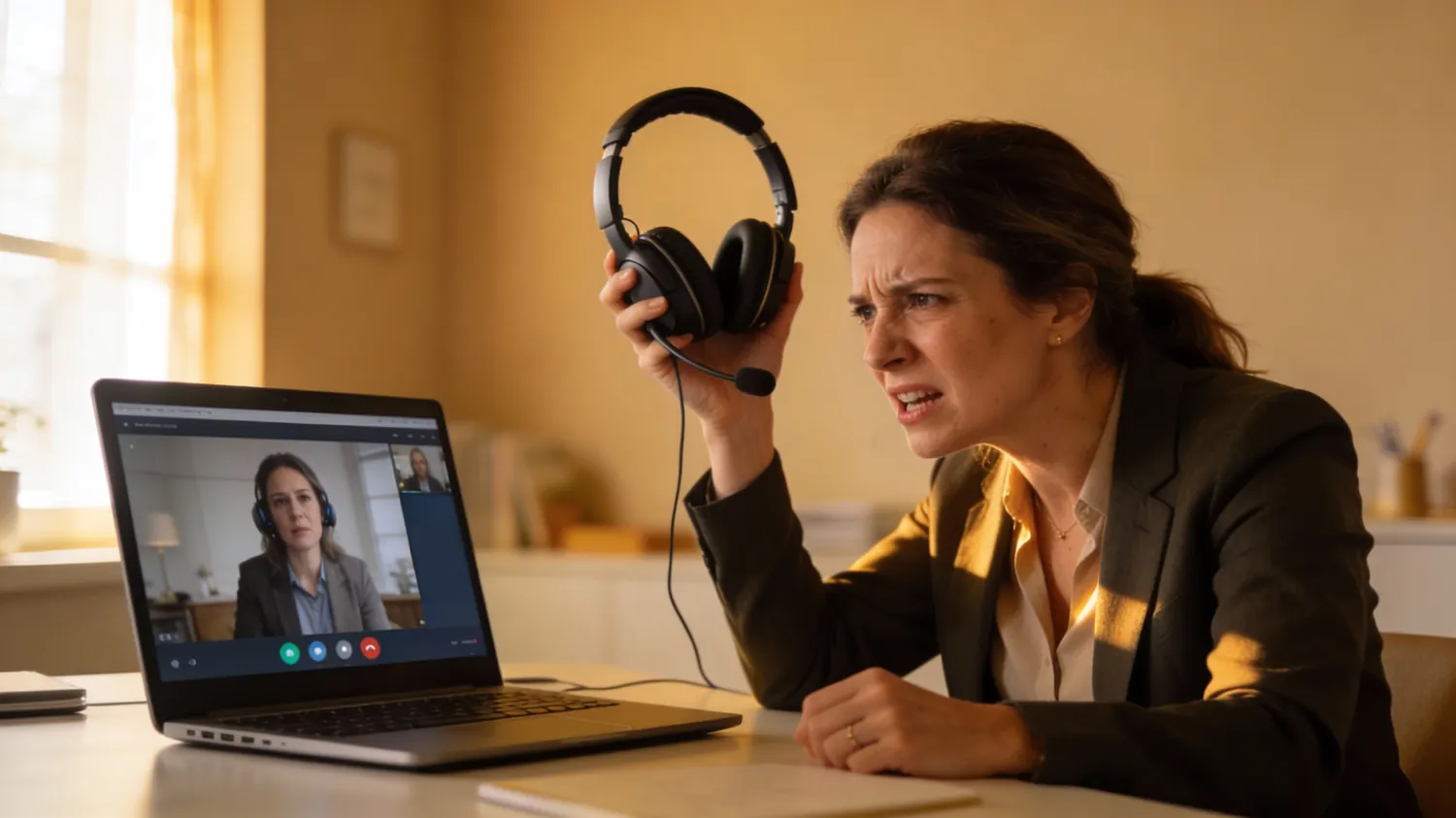
The underestimated problem in the home office: fit is productivity
In everyday working life, it's not just sound that counts, but above all: a stable fit, no pressure, no heat, no readjustment.
Over-ears can create pressure on the temples and crown with increasing wearing time, while standard in-ears with S/M/L tips often remain compromises - especially because ear geometries vary greatly (even between left and right ear).
If an earbud is not stable, it affects several things at once: comfort, isolation, microphone performance and your concentration.
That's why the solution doesn't start with "more features", but with the question: Does the device really fit your ear?
Why standard solutions often lose out in the office
Many headsets are okay for "short sessions", but they are rarely ideal for the reality of working from home with long wearing times and frequent calls.
1) Over-ear headsets: comfortable at the beginning, burdensome at the end
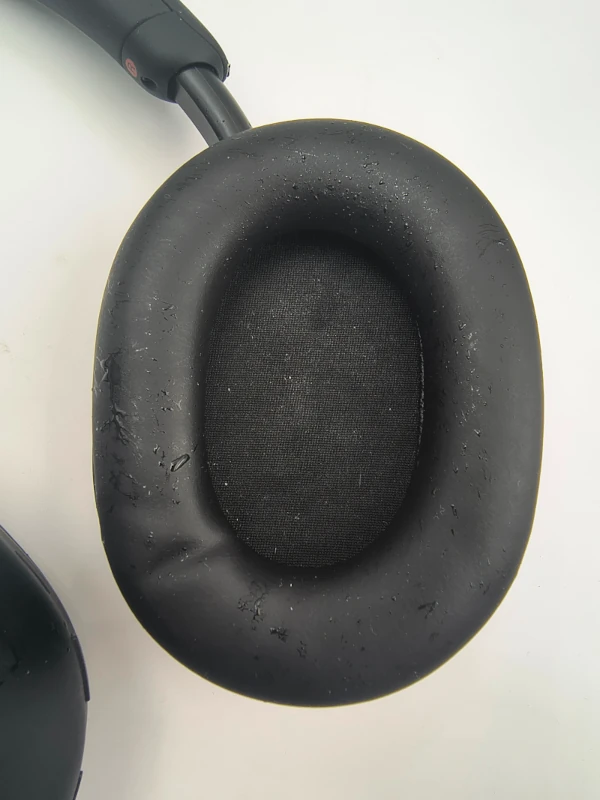
Over-ears distribute weight over the headband and padding, which can be comfortable at first, but becomes a problem for many people over the hours.
In addition, there is heat build-up, which unconsciously takes you out of focus because you "constantly feel something on your head".
Standard TWSs usually use a dynamic driver for the entire spectrum - a space/cost compromise.
2) Standard True-Wireless: good idea, but statistical fit
Classic TWSs are developed for average shapes and try to compensate for deviations with a few silicone attachments.
This is suitable for the mass market, but is not synonymous with "8-hour suitable".
3) Poor voice quality
The optimization and quality of the microphone itself is important for voice quality. The microphone should be as close to the mouth as possible to avoid interference. ANC does not play a role in call quality.
The custom solution: Orphit customized in-ears for calls & deep work
Orphit is a new category in the TWS market: Custom Wireless Stereo - wireless in-ears that are anatomically customized to take comfort, isolation and communication to another level.
Perfect fit through ear molding (3D scan or silicone)
The process starts with your ear geometry being recorded by the hearing care professional: either by digital 3D scan or classic silicone impression.
Precision is crucial (including sufficient insertion depth/imaging up to at least the second bend) because it directly influences the fit, seal and sound.
Natural Noise Reduction (NNR): Quiet without "ANC pressure"
Instead of digitally "calculating away" the surroundings, Orphit uses a passive, anatomically optimized seal in the ear canal: Natural Noise Reduction (NNR).
You can understand the effect immediately if you briefly close your ear canal with your finger. It is precisely this physics that makes NNR so efficient and pleasant in everyday life.
In addition, our white paper describes an acoustic effect through insertion depth: Bone Conduction Enhancement (BCE), which can support bass perception.
This is not "DSP magic", but a side effect of positioning and coupling in the ear.
Call quality: dual CVC microphones and stable positioning
For most earbud users, call/call quality is important.
In video calls, intelligibility counts, and this depends not only on the microphone itself, but also on where the microphones are positioned. Software such as Zoom and Teams offer noise suppression, but this works best on the headphones themselves.
Orphit relies on dual-CVC microphones (front/rear on the earbud) and benefits in everyday use from the fact that the fit is anatomically stable and the voice is clearly audible during calls.
We also made sure that the call quality was good in wind and outside noise. Wind is generated in a specially developed test setup and the voice quality is tested.
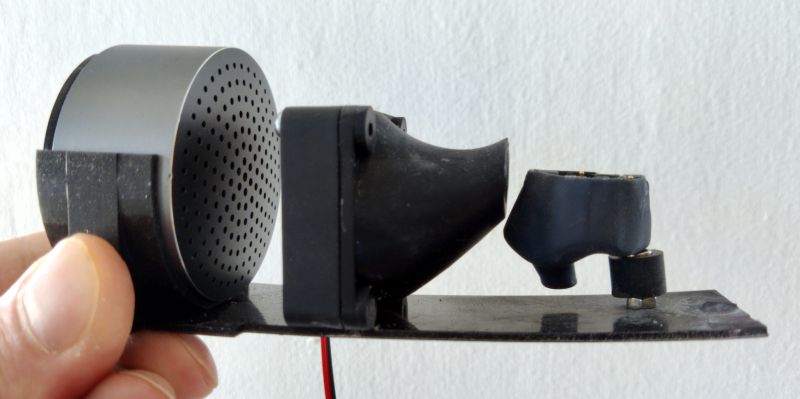
Standard TWSs usually use a dynamic driver for the entire spectrum - a space/cost compromise.
Orphit works with multi-way systems and passive-analog crossover without digital signal manipulation to achieve a natural sound characteristic.
Depending on the version, hybrid setups are also possible, e.g. with an additional wired option via MMCX/2PIN for professional audio applications.
So you can work wirelessly and be on the move, and listen "critically" wired if necessary.
Custom vs. standard: what really changes in everyday life
| Aspect | Over-ear headset | Standard TWS | Orphit Custom in-ears |
|---|---|---|---|
| Comfortable to wear after 6-8 hours | Weight/heat/pressure points possible | Tip compromise, readjustment possible | Anatomically stable, made to fit your ear |
| Isolation in the home office | Passive via upholstery | Often ANC as the main solution | NNR through sealing (passive, pleasant) |
| Call comprehensibility | Good depending on the model, but variable | Depending on seat and environment | Dual CVC + constant positioning |
| Sound character | Often "headset" tuning | 1 driver, all-in-one | Multi-way system, passive crossover, natural |
| Setup/process | Available for immediate purchase | Available for immediate purchase | Ear impression + production, with test shell possible |
For whom custom in-ears are particularly worthwhile (and when not)
Custom-made in-ears are not a "gadget" but a work tool, especially if you wear them for many hours a day and your focus depends on comfort.
Very suitable if you ...
- are in calls or listening to music for 4+ hours a day
- pressure points/heat from over-ears or standard in-ears are never permanently stable.
- We want a solution that combines comfort, isolation and clear communication.
Probably not ideal if you ...
- Only uses headphones occasionally
- Do not want to wait and want to buy "immediately" (custom-made earphones require molding and individual production).
The next step: From ear scan to your Orphit
- Ear impression at the hearing care professional (3D scan or silicone), with a focus on sufficient insertion depth and a clean image.
- Design of the shell using CAD.
- Manufactured in Germany as custom wireless stereo.
If you no longer want to see your headphones as a "necessary evil", but as a tool for quiet, concentrated working days, then the logical next step is to find a solution that adapts to you and not the other way around.